
History · Traditions
What Is Sool?
Korea has a long history of drinking culture, closely tied to agricultural life, family rituals, and local traditions. For centuries, alcoholic drinks have been part of everyday meals as well as ancestral ceremonies and village celebrations.
Different landscapes and local produce have shaped distinctive brewing cultures across Korea. Working with locally abundant rice, other grains, and fruit, communities developed their own methods of making drinks and customs around drinking them.
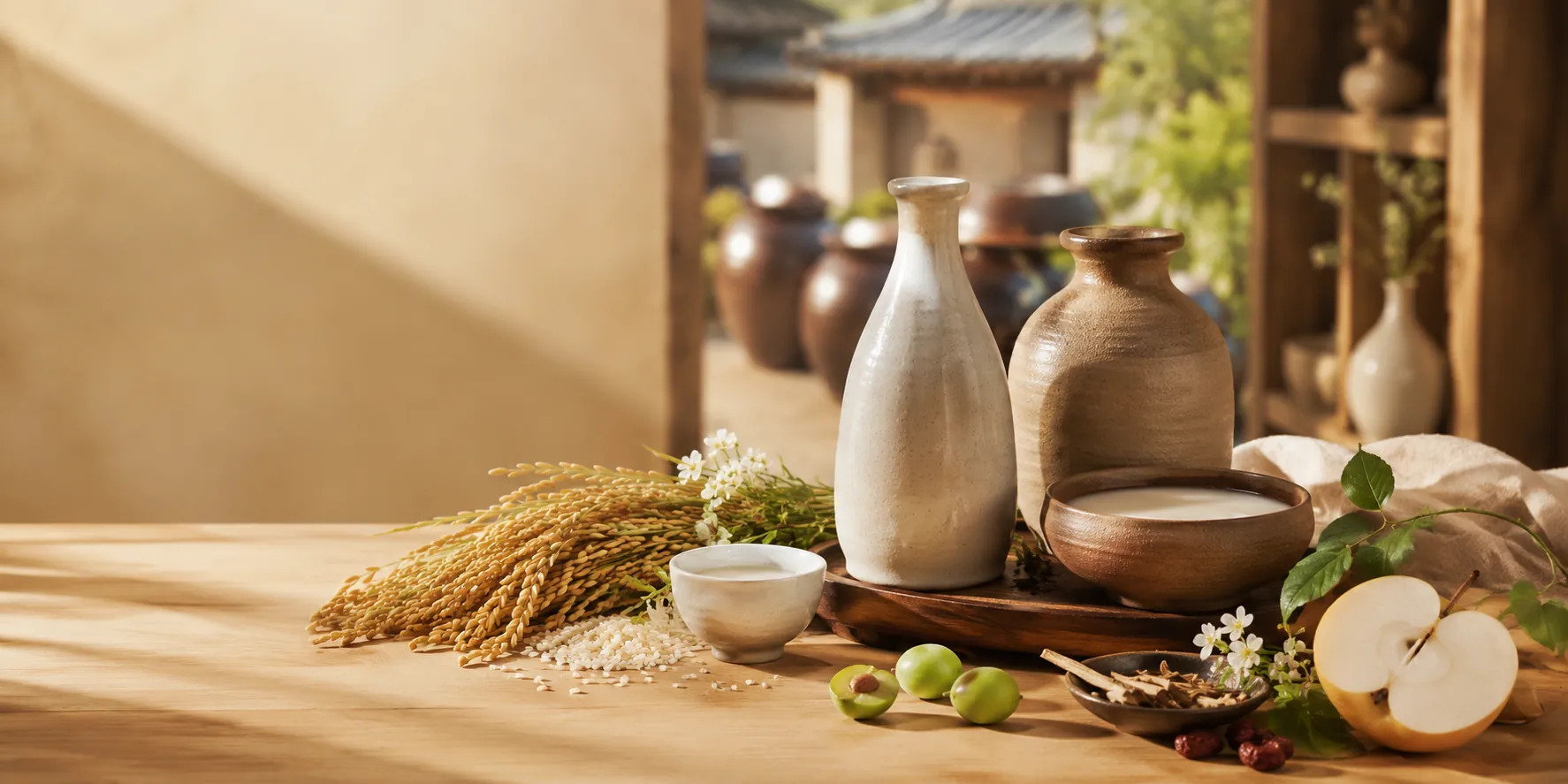
Despite their variety, these drinks all fall under the Korean word sool (술). Sool does not refer to a single type of drink. It encompasses a wide range of fermented and distilled drinks, including makgeolli (막걸리), yakju (약주), cheongju (청주), distilled soju (소주), and fruit wines.
Sool’s character comes from its relationship with the place it is made. The ingredients, location, and local climate are reflected in both its flavors and the way it is produced. Drinks from different regions carry not only different tastes, but also something of local life and culture.
This brewing culture, rooted in families and local communities, underwent major changes in modern times. Colonial rule and war disrupted established ways of producing food and living, while postwar food shortages meant that feeding people had to take priority. As large-scale, standardized production gradually became dominant, many distinctive regional drinks faded from everyday life.
Only recently have Korea’s traditional drinks begun to receive renewed attention. Consumers are taking a closer look at where a drink comes from, what goes into it, and who makes it. A new generation of brewers is also revisiting traditional brewing knowledge and combining it with modern production techniques and brand design. In doing so, they are bringing regional drinking cultures that had faded from view back into contemporary life in new ways.
As these drinks return to view, their ties to place are drawing more attention too. From local produce and brewing techniques to the location of the brewery, every sool has its own origins and background. These differences give each drink its flavor and offer a glimpse of the place and culture it comes from.
This is also how we at Buy Korean Sool want to introduce Korean drinks.
When we introduce a drink, we also want to share where it comes from, what goes into it, and how it relates to the place it is made. By introducing different breweries, products, and regions, we hope to help consumers and business partners discover and better understand the evolving world of Korean sool.
In the next article, we’ll start with the definition of Korean traditional sool.