
History · Traditions
Is Korean Sool Just Soju and Makgeolli?
What comes to mind when you think of Korean drinks?
Probably the green bottles of soju that often appear in Korean dramas, or the makgeolli served in Korean restaurants. Both are certainly common in Korea, but they offer only a limited view of the country's drinking culture.
In Korean, alcohol has a simple name: 술 (sool).
Sool does not refer to one particular type of drink. It is the general Korean word for alcohol. Soju, makgeolli, beer, and wine can all be called sool.
Within the drinking culture developed in Korea, familiar makgeolli sits alongside yakju (약주), cheongju (청주), distilled soju, and many kinds of fruit wine.
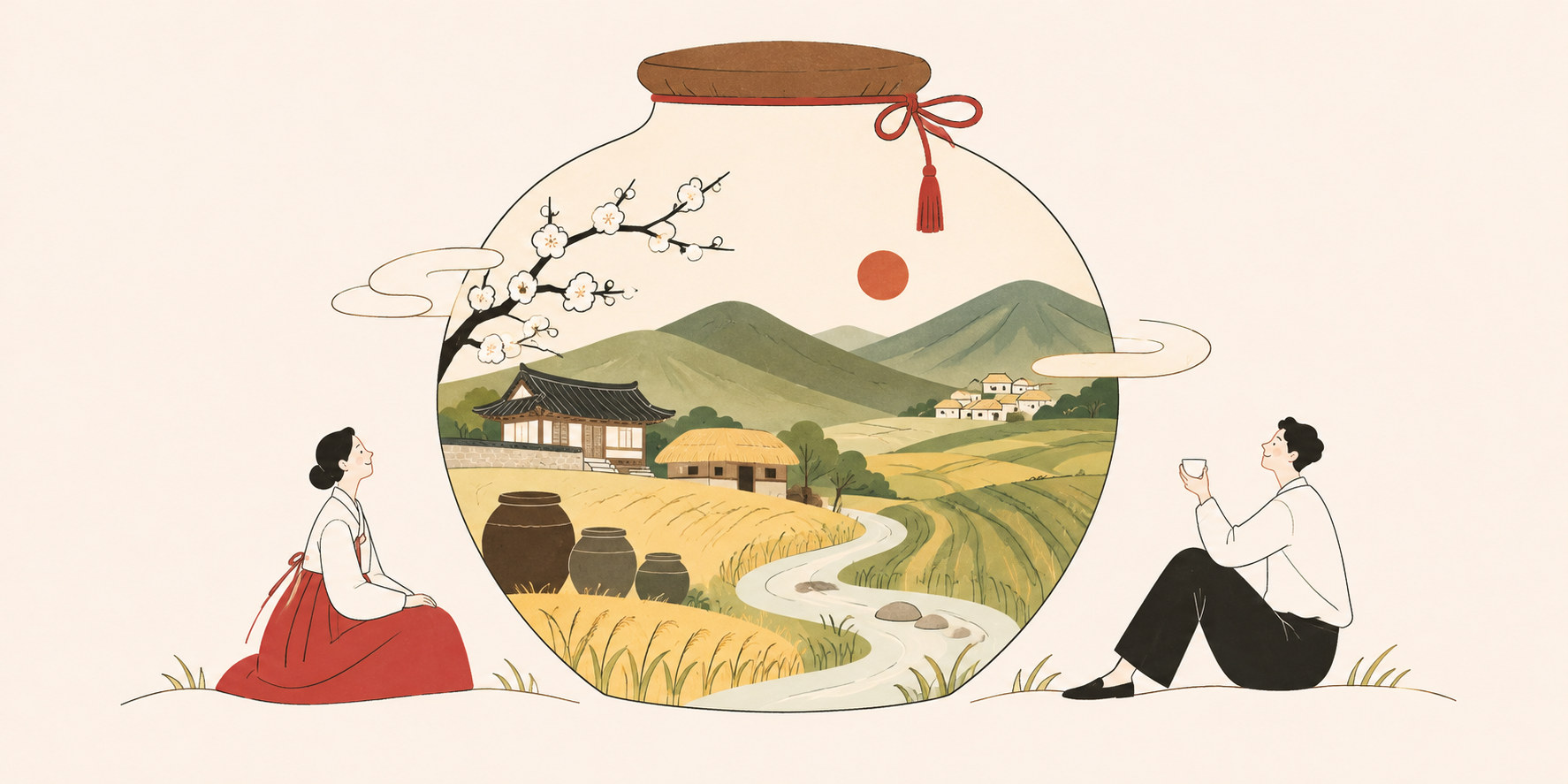
Korea has a long history of brewing. For centuries, alcohol has been part of everyday food culture and closely connected to agricultural life, family rituals, and local traditions. From ancestral rites to village celebrations, it has played many roles in people's lives.
Because crops and ways of life differed from region to region, people developed distinctive methods of making alcohol. Some places brewed with rice, while others used locally abundant fruit or grain. Different ingredients, brewing techniques, and drinking customs gave Korea a diverse range of regional drinking cultures.
In the past, many brewing techniques and recipes were passed down through families and local communities. Colonial rule, war, postwar food policies, and the move toward large-scale standardized alcohol production gradually pushed many regional drinks and traditional techniques out of everyday life.
Only in recent years has this begun to change.
As Korean consumers place greater value on food culture and local products, traditional brewing has drawn renewed attention. More people now care about the ingredients in a drink, who made it, and the local character behind it.
At the same time, a new generation of brewers is studying traditional knowledge anew and combining it with modern production techniques and brand design. Some breweries work to preserve techniques passed down in their regions. Others build on tradition to develop new flavors and products. Together, they are returning Korean sool to everyday life in more varied forms.
Buy Korean Sool hopes to introduce more people in Taiwan to this diversity.
We believe that knowing a Korean drink means more than knowing its name and flavor. It also means learning who made it, where it comes from, and what stories lie behind it.
By introducing different breweries, products, and production regions, we will help consumers and business partners discover Korean sool and the brewing cultures behind it.